Written by Juliette Poelman
Published on 13 July 2026
Kiribati is Affected by Climate Change
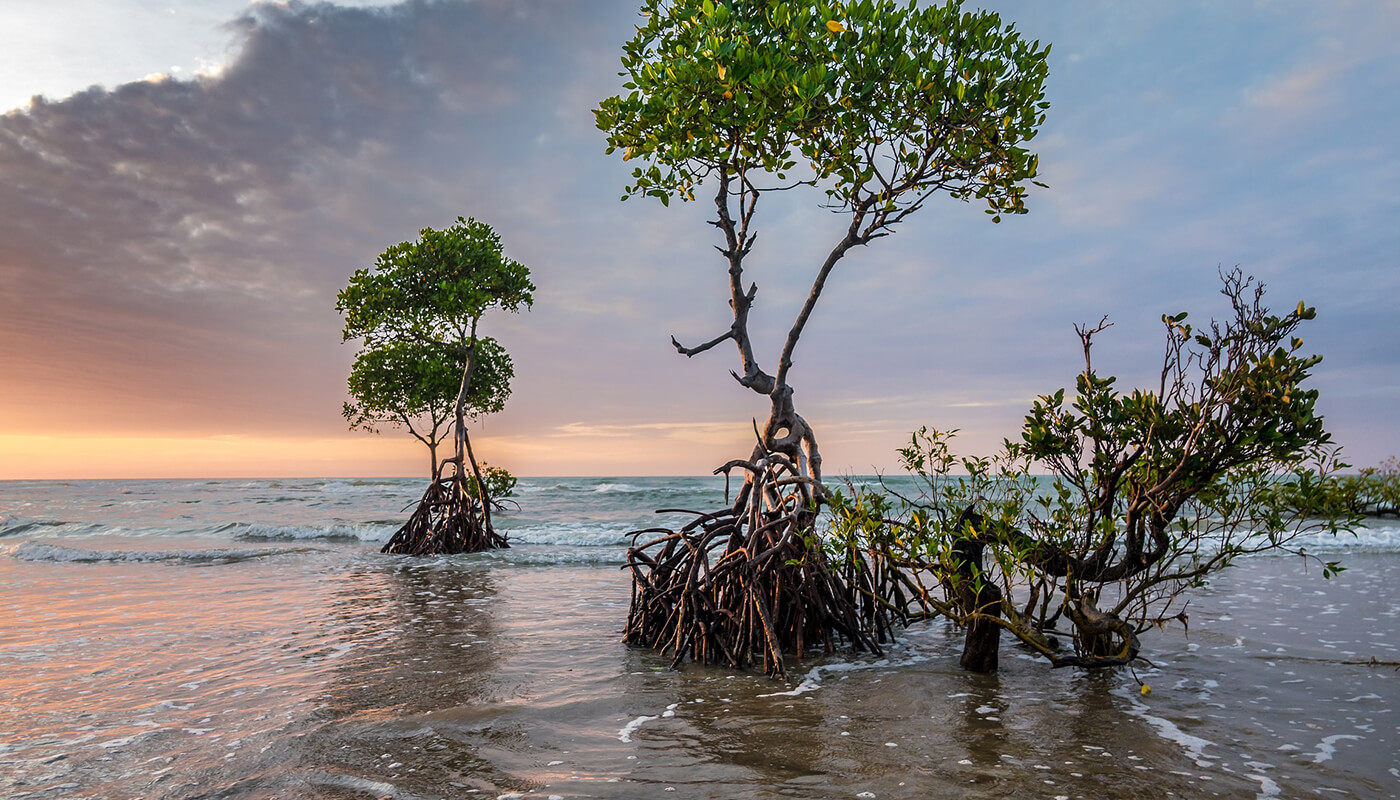
Residents of Kiribati see the water getting closer, and with it, their living environment increasingly disappearing. Kiribati consists of three island groups in the middle of the Pacific Ocean and is only three to four meters above sea level. Kiribati is therefore very vulnerable to the negative effects of climate change.1 The Pacific Ocean is washing away more and more land, and experts even predict that Kiribati will completely disappear under water by 2100.2 This also threatens to submerge the living environment of many islanders, forcing some residents to relocate in order to literally keep their heads above water.3 Teitiota, an inhabitant of Kiribati, was also affected by the negative effects of climate change. Together with his family, he fled to New Zealand and attempted to be recognized as a climate refugee and obtain a residence permit this way.4 Within international refugee law, the Convention Relating to the Status of Refugees5 (hereinafter: the Refugee Convention) occupies a central position.6 This blog will therefore examine whether the rights of climate refugees are effectively guaranteed by this convention.
Publication Series on the Rights of Climate Refugees
Juliette wrote her thesis on the position of the climate refugee within international law to complete her Bachelor of Laws at Maastricht University. This publication consists of three parts. The first part focuses on defining the term ‘climate refugee’ and the UN Refugee Convention. The second part discusses the most well-known case regarding climate refugees, Teitiota v. New Zealand, and finally, the third part will examine whether human rights provide adequate protection for climate refugees.
Who is the Climate Refugee?
The first question to be answered is: who is the climate refugee? Strictly speaking, the term ‘climate refugee’ is not (yet) legally correct, leaving the status of climate refugees undefined in international law.7 There is much disagreement about which term should be used. These include ‘environmentally displaced persons’,8 ‘environmental refugees’,9 and ‘climate refugees’.10 Some suggest that the term ‘refugee’ only applies to people fleeing their own government and is therefore not appropriate for those fleeing the negative effects of climate change.11 Biermann & Boas, however, see no convincing reason to reserve the stronger term ‘refugee’ for a category of people that became the centre of attention after 1945 and to use less appropriate terms – such as ‘climate-related displaced persons’ – for new categories of refugees who are now being forced to leave their homes, with similarly grim consequences.12 This blog will use the Biermann & Boas definition in combination with the existing refugee definition of the Refugee Convention. In this way, I believe the concept of ‘climate refugee’ is best incorporated into existing international law.
The climate refugee definition that will be used is as follows:
‘A person who must leave his habitat immediately or in the near future due to sudden or gradual changes in his natural environment related to at least one of the three consequences of climate change: sea level rise, extreme weather events, and drought and water scarcity, and who is therefore outside the country of his nationality and who cannot invoke the protection of that country, or who, if he has no nationality and, as a result of the above-mentioned effects of climate change, resides outside the country of his former habitual residence, cannot return there.’13
A definition that is too broad will not provide adequate legal protection for those displaced by the negative impacts of climate change. The Biermann & Boas definition, however, has a specific scope of application, focusing primarily on people directly affected by climate change. This definition provides clarity and precision by concentrating on individuals forced to leave their habitat due to the negative effects of climate change such as sea level rise, extreme weather conditions, drought, and water scarcity.14 This approach aligns closely with the current scientific consensus on the main effects of climate change.
The 1951 Refugee Convention
According to Article 1 (A)(2) of the Refugee Convention, the term ‘refugee’ shall apply to any person who:
“As a result of events occurring before 1 January 1951 and owing to well-founded fear of being persecuted for reasons of race, religion, nationality, membership of a particular social group or political opinion, is outside the country of his nationality and is unable or, owing to such fear, is unwilling to avail himself of the protection of that country; or who, not having a nationality and being outside the country of his former habitual residence as a result of such events, is unable or, owing to such a fear, is unwilling to return to it.”
If all conditions are met, a person qualifies as a refugee and can enjoy the rights set out in the Refugee Convention. However, a climate refugee does not fall within the scope of this refugee definition because there is no well-founded fear of persecution due to any of the five prosecution grounds listed above.15
First of all, there is no persecution. Whether something amounts to ‘persecution’ is assessed on the basis of the nature of the right that is at risk, the severity of the restriction or impairment thereof, and the likelihood that the restriction or impairment will occur in the individual case.16 Although the negative effects of climate change can be harmful and in some cases even fatal, the requirement of ‘persecution’ as currently understood and applied in national and international law is not being met.17 Part of the problem with this requirement lies in identifying a ‘persecutor’. For example, the government of an island such as Kiribati, whose residents flee the negative effects of climate change, is not responsible for the entirety of climate change, nor does it develop policies that increase its negative impacts on certain sectors of the population.
It could be argued that the ‘international community’ can be qualified as the ‘persecutor’ and in particular the industrialized countries, whose inability to reduce greenhouse gas emissions had resulted in the current situation.18 According to McAdam, this provides a complete reversal of the traditional refugee paradigm:
‘Whereas Convention refugees flee their own government (or private actors that the government is unable or unwilling to protect them from), a person fleeing the effects of climate change is not escaping his or her government but rather seeking refuge from – yet within – countries that have contributed to climate change.’19
I think it is indeed difficult to maintain that climate refugees seek asylum in a country that, like the country they are fleeing, qualifies as a ‘persecutor’. In many cases, climate refugees will be dependent on the countries that are also part of the reason they need legal protection. Based on this analysis, it can be concluded that the climate refugee does not qualify as a Convention refugee because the requirements of Article 1 (A)(2) of the Refugee Convention will not be met.
Nevertheless, some persons crossing the border due to climate change could qualify for the refugee status. This could be the case, for example, if they are victims of natural disasters and they flee their country because the government has deliberately denied or hindered their assistance in order to punish or marginalize them on the basis of one of the five grounds for persecution as laid down in the Refugee Convention.20
Conclusion
Since climate refugees will only in exceptional cases have a well-founded fear of one of the five restrictive grounds for persecution, the Refugee Convention does not provide adequate legal protection for climate refugees in the vast majority of cases, so another way of providing such protection will have to be explored. The next two publications will discuss the case of Teitiota v. New Zealand and examine whether human rights do provide adequate protection for climate refugees.
References
Apap & Harju 2023
J. Apap & S.M. Harju, The concept of ‘climate refugee’. Towards a possible definition (Briefing European Parliament), European Parliamentary Research Service 2023, europarl.europa.eu.
Behrman & Kent 2018
S. Behrman & A. Kent, Facilitating the Resettlement and Rights of Climate Refugees. An Argument for Developing Existing Principles and Practices, London: Routledge 2018.
Biermann & Boas 2010
F. Biermann & I. Boas, ‘Preparing for a Warmer World. Towards a Global Governance System to Protect Climate Refugees’, Global Environmental Politics (10) 2010, afl. 1, p. 61-67.
Climate Risk Country Profile. Kiribati 2021
Climate Risk Country Profile. Kiribati, Washington: World Bank Group 2021.
El-Hinnawi 1985
E. El-Hinnawi, Environmental refugees (UNEP report), Nairobi: UNEP 1985.
McAdam 2012
J. McAdam, Climate Change, Forced Migration, and International Law, Oxford: Oxford University Press 2012.
IPCC 2023
IPCC, Climate Change 2023. Synthesis Report. Summary for Policymakers. Contribution of Working Groups I, II and III to the Sixth Assessment Report of the Intergovernmental Panel on Climate Change, Geneva, Switzerland: IPCC 2023.
Storlazzi et al. 2018
C.D. Storlazzi et al., ‘Most atolls will be uninhabitable by the mid-21st century because of sea-level rise exacerbating wave-driven flooding’, Science Advances (4) 2018, afl. 4, p. 1, DOI:10.1126/sciadv.aap9741.
Waldinger 2015
M. Waldinger, The effect of climate change on internal and international migration. Implications for developing countries (Working paper), Centre for Climate Change Economics and Policy 2015.
UNHCR 2009
UNHCR, Forced Displacement in the Context of Climate Change. Challenges for States under International Law. Submission to the 6th session of the Ad Hoc Working Group on Long-Term Cooperative Action under the Convention (Working Paper UNHCR), 20 May 2009.
UNHCR 2020
UNHCR, Legal Considerations Regarding Claims for International Protection Made in the Context of the Adverse Effects of Climate Change and Disasters (Working Paper UNHCR), 2020.
1 Climate Risk Country Profile. Kiribati 2021, p. 2.
2 Storlazzi 2018, p. 1.
3 ‘Over 100,000 residents of Kiribati drown in the Pacific Ocean’,
4 Supreme Court of New Zealand 20 July 2015, Ioane Teitiota v The Chief Executive of the Ministry of Business, Innovation and Employment [2015] NZSC.
5 Convention Relating to the Status of Refugees, Geneva 28-07-1951.
6 Biermann & Boas 2010, p. 47.
7 Waldinger 2015, p. 3.
8 Apap & Harju 2023, p. 5.
9 El-Hinnawi 1985, p. 4.
10 Biermann & Boas 2010, p. 67.
11 Berhman & Kent 2018, p. 10.
12 Biermann & Boas 2010, p. 64.
13 Biermann & Boas 2012, p. X.
14 IPCC 2023, p. 5.
15 McAdam 2012, p. 43.
16 McAdam 2012, p. 43.
17 McAdam 2012, p. 43.
18 McAdam 2012, p. 43.
19 McAdam 2012, p. 43.
20 UNHCR 2009, p. 2.
21 UNCHR 2020, p. 9-10.