Written by Juliette Poelman en Pieter Luttikhuis
Published on 13 July 2026
The Marechaussee Case
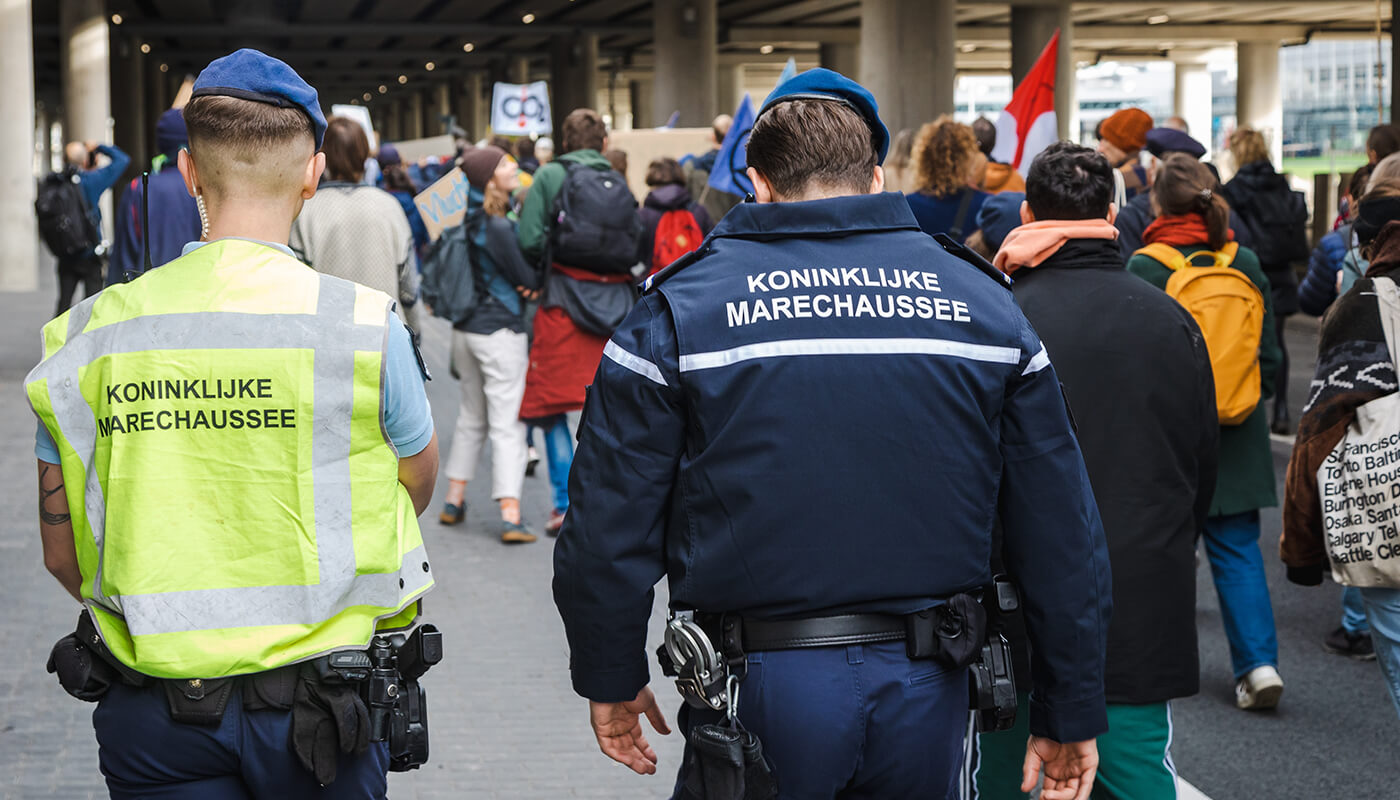
Since the Wet afwikkeling massaschade in collectieve actie (“the WAMCA”) (English: Dutch Act on Redress of Mass Damages in a Collective Action) came into force on 1 January 2020, several claims for damages have already been initiated. As discussed in the previous publication, all WAMCA proceedings can be found in the Central Register of Class Actions (see WAMCA register). The WAMCA allows interest groups to opt for a “lighter admissibility regime” for claims – other than monetary claims – that have an idealistic purpose and represent a very limited financial interest. An example is a collective claim against the State of the Netherlands.1 A number of interest groups including Amnesty International (“Amstesty et al”) brought a claim against the Ministry of Defence and the Ministry of Justice and Security, in particular the Koninklijke Marechaussee (“KMar”). The claim serves a collective interest, namely the termination of alleged ethnic profiling by the KMar.
In brief
The KMar is in charge of Mobiel Toezicht Veiligheid (“MTV”) (English: Mobile Security Surveillance). The purpose of the MTV is to combat illegal residence after border crossing. As part of this, the KMar can pull over individuals who have just crossed the Dutch border to ask them about their identity, nationality and residence status. In doing so, the KMar selects the persons based on a number of varying factors. In some cases, the KMar also uses personality traits based on race or ethnicity (such as skin colour) as indicators. The KMar always does this in combination with other indicators and only if necessary.2
Amnesty et al believe that by acting in this way, the KMar is guilty of ethnic profiling and racial discrimination. Two claimants in the case claim to have been victims of ethnic profiling because they were removed from the queue at the airport for a check. In the case, Amnesty argues that the KMar’s conduct is unlawful because it violates several human rights treaties. They seek a court order prohibiting the State, which the KMar falls under, from continuing to use race-derived characteristics when selecting individuals for MTV checks.3
The court’s judgment
The court dismissed Amnesty’s claims. Amnesty then appealed and in this appeal, the Court of Appeal ruled in favour of Amnesty. The Court of Appeal held that the KMar did indeed discriminate on the basis of race or ethnicity. Given the serious consequences of discrimination on grounds of race or ethnicity, such discrimination is only allowed if there are particularly compelling reasons for doing so. According to the Court of Appeal, the State has not demonstrated any such particularly weighty reasons, making the KMar guilty of racial discrimination, which is prohibited. Consequently, the Court of Appeal prohibits the State from making selection decisions based on race when carrying out MTV checks.4
Criticism
Recently, the Mass Tort Lawyers Association (“Vereniging Massaschade Advocaten”) and several lawyers have criticised the WAMCA procedure.5 As explained earlier, the procedure is split into an admissibility phase and a substantive phase. The critique from practitioners relates particularly to the first phase of the process.6
A first criticism concerns the way in which collective action funding is organised. This is because the funding options for collective actions are limited. For non-compensation cases, it is mainly necessary to rely on, for example, membership contributions and crowdfunding, now that state-financed legal aid has not been made possible for this. For compensation cases, costs quickly run high, necessitating funding by a commercial litigation funder.7 In practice, these external parties already weigh very carefully whether or not to support WAMCA proceedings, which means that already the start of the proceedings can be difficult and time-consuming. On top of this, in a recent WAMCA proceeding against TikTok, the Amsterdam court determined a maximum fee for litigation funders.8 Moreover, in the admissibility stage, the court may ask the plaintiff to produce any contract with a litigation funder to verify that there is not too much power with the funder. All this makes it less attractive for commercial litigation funders to fund a class action.9
Besides the funding aspect, the rest of the admissibility phase is also subject to criticism. The law has strict requirements for admissibility and thus many possible defences for the other party. Partly because of this, the admissibility phase often takes a long time and the chances of a substantive hearing turn out to be slim in practice.10 Particularly in proceedings that involve an idealistic claim with a small financial interest, many WAMCA proceedings don’t pass the admissibility test.11 However, this also occurs regularly in other WAMCA-cases. A high-profile example of this was The Privacy Collective’s mass claim case against Oracle and Salesforce, in which the Amsterdam court declared the foundation inadmissible on the grounds that the foundation was not sufficiently representative of its collective.12
Despite these obstacles, the number of WAMCA cases does continue to grow, as can be seen in the register. As a result, the strict – and currently somewhat unpredictable – admissibility criteria are slowly but surely becoming clearer.13
In conclusion
As can be seen in the KMar case, the WAMCA allows for efficient and collective settlement of damages. If several collective actions concerning the same event are pending, the court appoints one exclusive representative to be responsible for filing a claim for damages on behalf of all interested parties. An interest organisation must meet certain requirements to qualify as an exclusive representative. At the same time, there are many hurdles in the WAMCA procedure. In particular, the admissibility and related funding options are still often obstacles in practice so far. How this will develop we cannot yet say with certainty. However, it is clear that we are slowly moving from complexity to more clarity with the WAMCA.
1 The Hague Court of Appeal 14 February 2023, ECLI:NL:GHDHA:2023:173.
2 Idem, para 1.1.
3 Idem, para 1.2.
4 Idem, para 1.3.
5 E. van der Schoot & M. Pols, ‘Advocaten: massaclaimwet verzandt en zet consument op achterstand’, 6 November 2023, fd.nl.
6 Freshfields Bruckhaus Deringer, ‘At a glance: class action formation in the Netherlands’, 31 October 2023, lexology.nl. See also, by way of illustration, Court of Amsterdam, 7 June 2023, ECLI:NL:RBAMS:2023:3499, JOR 2023/240, cf. B.T. Klinger (Fossil Free/KLM).
7 NJB 2023/2237: samenvatting onderzoeksrapport financiering collectieve acties, p. 2598.
8 Court of Amsterdam 25 October 2023, ECLI:NL:RBAMS:2023:6694, JOR 2023/294, cf. T.M.C. Arons (SOMI and others/TikTok); Martijn Pols, ‘Judge raises bar in mass claim cases against tech companies’, 7 December 2023, fd.nl.
9 W.H. van Boom, ‘WCA⇨ WCAM⇨ WAMCA’, TvC 2019-4, p. 159.
10 See footnote 5.
11 Court of Amsterdam 25 October 2023, ECLI:NL:RBAMS:2023:6694 (SOMI and others v TikTok). For a case in which the lighter regime was successfully applied, see: Court of Amsterdam 7 June 2023 (Fossielvrij/KLM).
12 Court of Amsterdam 29 December 2021, ECLI:NL:RBAMS:2021:7647. NB: this judgment is still under appeal at the time of writing. It concerns admissibility and representativeness. The judgment of the Amsterdam Court of Appeal will follow on 18 June 2024.
13 Court of Amsterdam 25 October 2023, ECLI:NL:RBAMS:2023:6694 (SOMI and others/TikTok); Court of The Hague 20 September 2023, ECLI:NL:RBDHA:2023:14036 (SILC/Airbus); Court of Amsterdam 25 October 2023 (Stichting Nuon-claim/Vattenfall).